Clinical-scale tracking
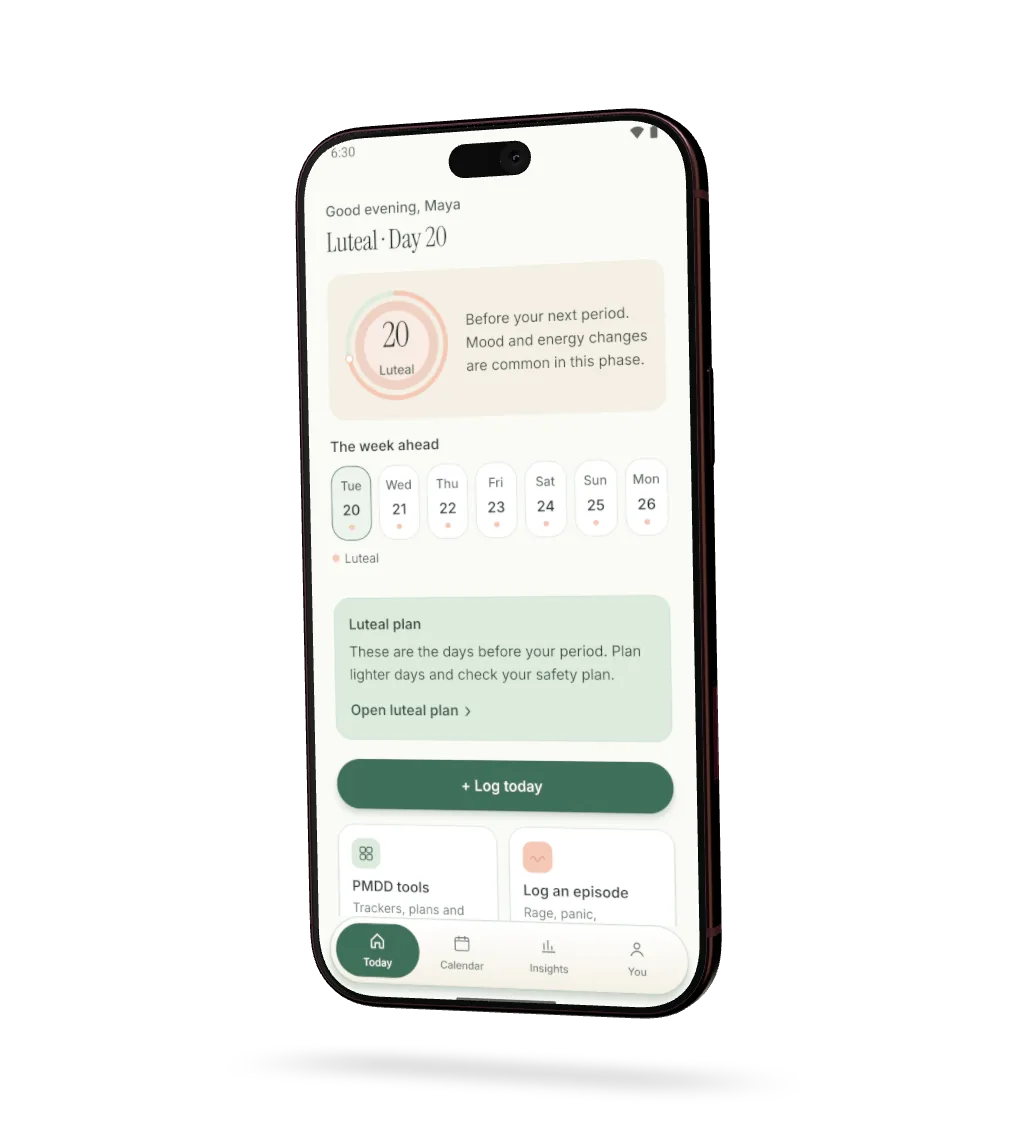
DRSP-based PMDD logging, cycle context, symptom patterns, and appointment-ready report flows are part of the mobile build.
A daily check-in for PMDD, PCOS and perimenopause. See how your symptoms follow your cycle, and bring the proof to your doctor.
Meet Ora
Ora is HormonaIQ's AI companion, and it is still being built carefully. The goal is simple: help you capture symptoms in plain language, connect them to cycle phase, and turn the pattern into something easier to bring into care.
We are designing this carefully because PMDD, PCOS, peri, endometriosis, and ADHD-cycle overlap all carry sensitive stories, not just data points.
Ora is not being designed to diagnose, prescribe, or replace a clinician. It is being designed to help you organize what you have lived through before you walk into the room.
You should not need a spreadsheet just to be believed.
How it works
Rate symptoms, sleep, focus, medication effect, and cycle context without turning tracking into homework.
Two complete cycles begin to show whether symptoms cluster around luteal phase, irregular cycles, or treatment changes.
The goal is an exportable report built for appointments: cleaner than a mood diary, more specific than a period calendar.
Built with boundaries
HormonaIQ is not being built as an AI doctor. The product is a tracking, reflection, and self-advocacy tool for people who need clearer evidence before a clinical conversation.
The whole app is coming soon. Ora is still being built, and the work now is focused on making the companion useful without letting it cross into diagnosis, medication advice, or treatment decisions.
HormonaIQ does not provide medical advice, diagnosis, or treatment. Reports and summaries are designed to support, not replace, a qualified healthcare provider.
DRSP-based PMDD logging, cycle context, symptom patterns, and appointment-ready report flows are part of the mobile build.
Ora is being built to help users reflect on logs, prepare for appointments, and summarize patterns without diagnosing or prescribing.
Health logs are encrypted on the phone and synced to the user account over an encrypted connection. No ads. No data sales.
The app includes support-resource paths and crisis-event handling designed for a sensitive PMDD and hormonal-health context.
Built for
Most cycle apps assume one condition and a 28-day cycle. Most people here have neither.
Daily symptom tracking with the DRSP, the same scale used in clinical trials. Two complete cycles become clinical documentation.
Rotterdam criteria logging. Irregular cycle tracking that doesn't assume a 28-day pattern. Data your endocrinologist can use.
Greene Climacteric Scale built in. Tracking that takes the transition seriously as a hormonal shift, not as a mood disorder.
Medication efficacy mapped onto cycle phase. Understand why focus and executive function change across the month.
Many of you carry more than one condition. HormonaIQ tracks them together, not as separate problems requiring separate apps.
Why we are building it this way
People already track this in Notes, spreadsheets, Bearable, Clue, Stardust, and paper logs.
The most requested output is not a pretty chart. It is a report a clinician can understand.
The first build is focused on learning from users before we ask anyone to trust it daily.
FAQ